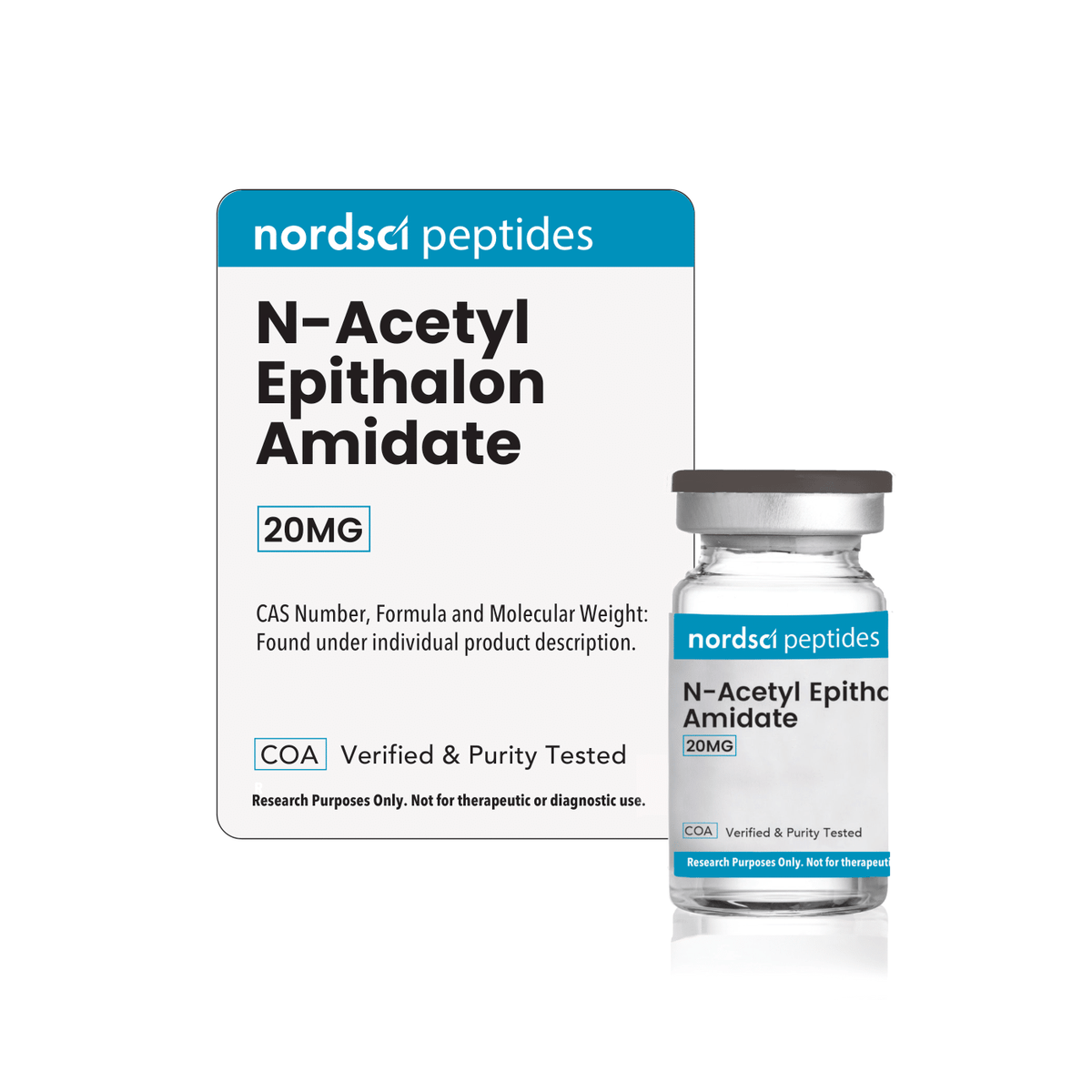
N-Acetyl Epithalon Amidate (20mg) – Product Description
N-Acetyl Epithalon Amidate (20mg) is a modified synthetic peptide studied in laboratory environments for its interaction with cellular regulatory pathways related to genomic stability, cellular signaling, and molecular aging mechanisms. This compound represents an acetylated and amidated analog of epithalon-related peptide structures designed to enhance molecular stability during experimental research applications. The compound is supplied strictly for controlled laboratory research investigating cellular signaling networks and molecular longevity pathways.
In molecular biology research, short regulatory peptides are frequently examined for their potential influence on cellular maintenance systems, gene expression regulation, and cellular response to oxidative or metabolic stress. N-Acetyl Epithalon Amidate has therefore been investigated within experimental frameworks focused on regulatory peptide signaling and long-term cellular stability pathways.
N-Acetyl Epithalon Amidate (20mg) – Research Specifications:
| Compound | N-Acetyl Epithalon Amidate |
| Quantity | 20mg per vial |
| Compound Type | Modified synthetic peptide analog |
| Purity / Identity | Research-grade; refer to Certificate of Analysis (COA) for lot-specific analytical verification |
| Appearance | Lyophilized peptide powder |
| Storage Conditions | Store sealed in a cool, dry environment protected from heat, light, and moisture |
| Research Use Only | Supplied exclusively for laboratory research use. Not for human consumption. |
What Is N-Acetyl Epithalon Amidate? Research Background
N-Acetyl Epithalon Amidate is a structurally modified peptide investigated in laboratory research exploring cellular aging mechanisms, genomic stability pathways, and regulatory peptide signaling networks. Structural modifications such as acetylation and amidation are often incorporated into peptide compounds to enhance stability, protect the peptide from enzymatic degradation, and extend functional activity during controlled research conditions.
Peptides related to epithalon structures have been examined in studies involving telomere-associated regulatory pathways, cellular lifespan regulation, and molecular signaling mechanisms associated with long-term cellular stability. Researchers investigating longevity biology frequently explore how regulatory peptides interact with genetic regulatory systems responsible for cellular replication, repair, and stress-response pathways.
Experimental longevity research programs often intersect with broader studies of mitochondrial signaling, oxidative stress regulation, and cellular repair pathways. In laboratory environments studying cellular resilience, researchers may evaluate multiple signaling systems simultaneously in order to understand the complex regulatory networks that influence cellular maintenance.
Important Research Notice: Nordsci research materials are supported by lot-specific analytical documentation. Certificates of Analysis are available for laboratories requiring verification of compound identity and analytical quality standards.
THIS PRODUCT IS INTENDED FOR LABORATORY RESEARCH USE ONLY. NOT FOR HUMAN CONSUMPTION. NOT INTENDED TO DIAGNOSE, TREAT, CURE, OR PREVENT ANY DISEASE OR CONDITION.
N-Acetyl Epithalon Amidate – Key Research Applications
1. Cellular Longevity Pathway Research
Longevity biology research often focuses on molecular signaling systems that regulate cellular lifespan and genomic stability. Laboratory experiments may investigate how modified peptide compounds interact with pathways involved in long-term cellular maintenance and replication processes.
2. Telomere Signaling Studies
Telomeres play a key role in maintaining chromosomal stability during cellular replication. Experimental research programs may examine peptide signaling pathways that interact with telomere-associated regulatory mechanisms in controlled laboratory environments.
3. Genetic Regulation Research
Cellular regulatory peptides may influence genetic expression systems involved in tissue maintenance and stress-response signaling. Laboratory studies may explore how modified peptide structures interact with regulatory pathways associated with gene expression and molecular stability.
4. Oxidative Stress Response Research
Oxidative stress is a major factor influencing cellular aging and tissue degradation. Researchers studying cellular resilience may examine compounds that interact with regulatory systems responsible for managing oxidative damage and metabolic stress responses.
Handling and Research Use Considerations
N-Acetyl Epithalon Amidate (20mg) should be handled using standard laboratory procedures for peptide research compounds. Proper storage conditions, controlled environmental variables, and careful documentation of experimental parameters help ensure consistent and reproducible outcomes in molecular biology research.
Protocol Design Considerations: Longevity research experiments may be influenced by variables including oxidative stress exposure, cellular metabolic activity, replication rates, and environmental stress conditions. Researchers should maintain strict experimental controls when studying regulatory peptide signaling pathways.
Note: The information above is provided strictly for laboratory research reference purposes. All experiments should be conducted by qualified personnel within appropriate laboratory facilities.
N-Acetyl Epithalon Amidate (20mg) – Certificate of Analysis (COA)
Each lot of N-Acetyl Epithalon Amidate supplied by Nordsci Peptides includes a Certificate of Analysis confirming compound identity and analytical purity verification. These reports support laboratory traceability and documentation standards required for controlled research applications.
Where to Buy N-Acetyl Epithalon Amidate for Research
Laboratories sourcing peptide materials typically prioritize analytical transparency, manufacturing consistency, and batch traceability. Nordsci Peptides supplies research-grade compounds supported by analytical verification and documentation designed to support reliable laboratory research workflows across multiple biological research disciplines.
IMPORTANT: N-Acetyl Epithalon Amidate (20mg) is supplied exclusively for laboratory research use. It is not approved for human consumption or therapeutic use. Researchers are responsible for ensuring compliance with all applicable institutional and regulatory guidelines governing research materials.
Scientific References
- Research literature examining regulatory peptides involved in cellular aging pathways.
- Studies investigating telomere-associated cellular signaling and genomic stability.
- Scientific investigations into oxidative stress regulation and molecular longevity biology.
- Laboratory analytical standards used for verification of peptide research compounds.