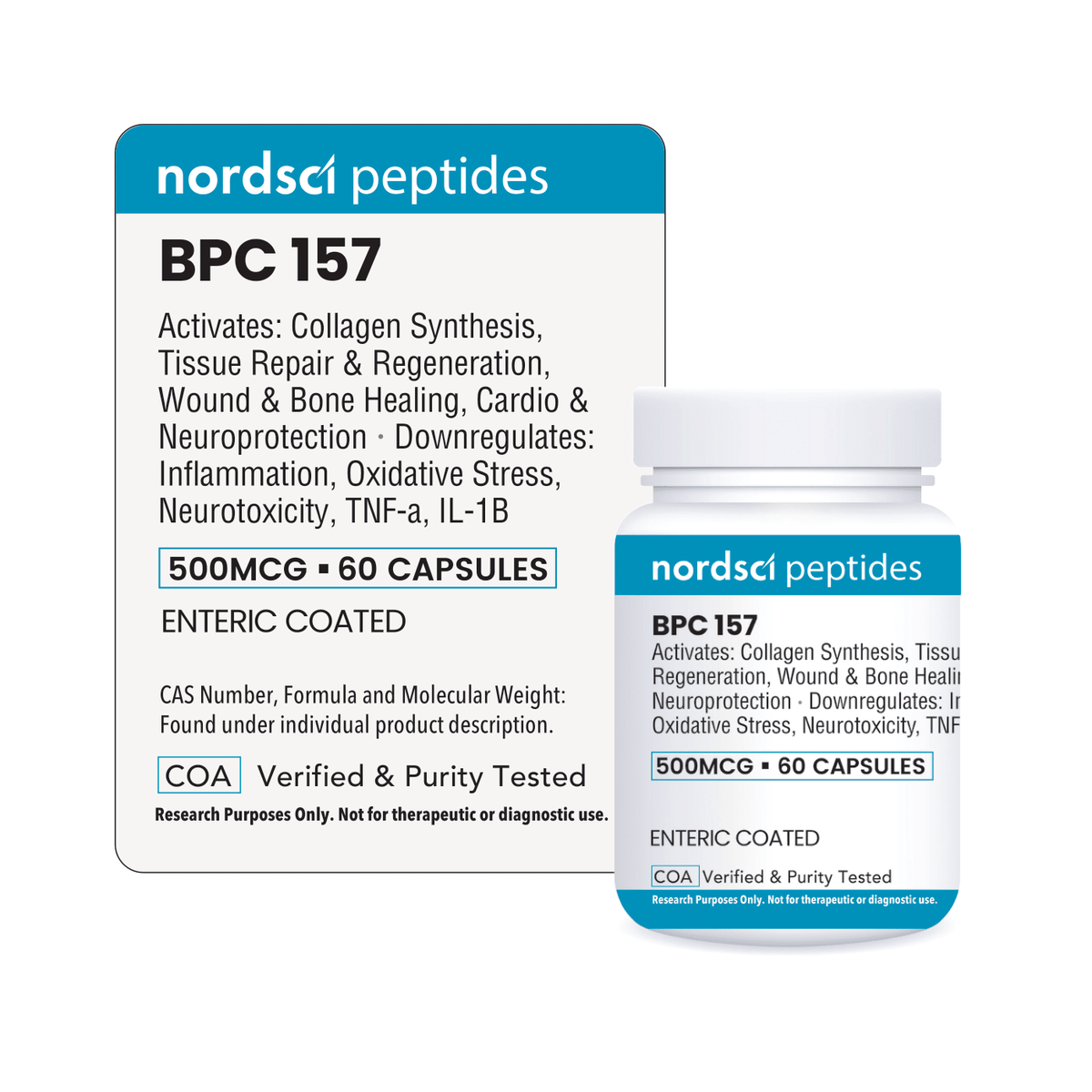
More about BPC 157 Capsules
BPC 157 Capsules provide a research-ready oral formulation of the synthetic pentadecapeptide Body Protection Compound 157, designed for controlled investigation of gastrointestinal integrity, connective tissue biology, and microvascular remodeling pathways. Each capsule contains BPC 157 embedded in an encapsulated matrix suitable for preclinical and in vitro workflow design where oral delivery and gut exposure are key experimental variables.
BPC 157 is derived from a naturally occurring protective protein in gastric juice and has been extensively studied in cell culture and animal models for its effects on mucosal barriers, fibroblast activity, angiogenesis, and nitric oxide-linked signaling. In capsule format, investigators can explore oral peptide stability, luminal exposure profiles, and GI-targeted research applications under rigorously defined conditions. In broader recovery-oriented protocols, teams may also compare capsule-based BPC exposure with adjacent repair compounds such as BPC 157, Thymosin Beta 4 Capsules, Thymosin Beta 4, or KPV to evaluate route-specific and pathway-specific differences.
BPC 157 Capsules Research Specifications:
| Unit Form | Encapsulated BPC 157 research formulation |
| Unit Quantity | 1 bottle of BPC 157 research capsules, with capsule count and per-capsule content indicated on the product label |
| Active Peptide | BPC 157 (Body Protection Compound 157) |
| Sequence | Gly-Glu-Pro-Pro-Pro-Gly-Lys-Pro-Ala-Asp-Asp-Ala-Gly-Leu-Val |
| Molecular Formula | C62H98N16O22 |
| Molecular Weight | ~1419.6 g/mol |
| Purity (HPLC) | ≥ 99% peptide content prior to encapsulation |
| Appearance | Off-white lyophilized peptide within hard capsules, with shell type specified on the product label |
| Source | Chemical synthesis |
| Storage Conditions | Store tightly closed in a cool, dry environment away from direct light and excessive humidity. Follow institutional SOPs for peptide-containing capsules. |
| Research Use Only | This encapsulated peptide product is designated exclusively for laboratory research use. Not for human consumption, clinical use, or veterinary treatment. |
What Is BPC 157? Research Background and Mechanism
BPC 157 is a synthetic fragment of a larger gastric protein that has been evaluated in numerous preclinical models for its impact on tissue protection, repair processes, and vascular adaptation. In cell culture and animal studies, BPC 157 has been associated with mucosal barrier support in the gastrointestinal tract, fibroblast recruitment and migration, angiogenic signaling, nitric oxide-related pathway interactions, oxidative stress marker modulation, and exploratory work in drug-induced tissue injury models.
Oral exposure models using BPC 157 are particularly relevant for understanding how luminal peptide presence may impact gastric and intestinal tissues, microbiome interfaces, and barrier-related endpoints. Capsule-based formulations can be deployed in research designs where standardized oral delivery, gradual disintegration, and reproducible dose presentation to the GI tract are critical variables. This makes BPC 157 Capsules a useful research tool when oral-format consistency is central to study architecture.
Important Research Notice: All discussion of potential biological roles is based on preclinical literature in animals and cell systems. BPC 157 Capsules from Nordsci are not approved as a drug, supplement, or therapy and must not be used for self-administration or any non-research purpose.
Oral Capsule Format in Experimental Design
While BPC 157 is commonly investigated as an injectable peptide in preclinical studies, encapsulated formats introduce additional dimensions for laboratory design. Capsule-based preparations can support simulation of oral exposure and GI transit in animal models, comparisons between systemic and luminal administration routes, study of peptide stability across gastric and intestinal environments, and evaluation of formulation variables such as fill materials, excipients, and capsule shells on release kinetics.
For in vitro work, capsules may be opened under controlled conditions and the contents dissolved or diluted into appropriate media. For in vivo preclinical models, any dosing paradigms must be developed, justified, and approved under institutional animal care protocols, with clear documentation that the work is non-clinical and non-therapeutic.
Core Research Areas for BPC 157 Capsules
1. GI Barrier and Mucosal Integrity Models
BPC 157 has been extensively profiled in rodent models of gastric and intestinal injury, where investigators monitor ulceration, bleeding, and mucosal regeneration. Capsule-based formats provide a route to evaluate direct luminal contact effects on gastric and intestinal tissues, interactions with acid, bile, and digestive enzymes, and cross-talk between peptide exposure and microbiome-related endpoints.
2. Tendon, Ligament, and Connective Tissue Biology
Preclinical data suggest that BPC 157 may influence tendon and ligament healing dynamics by enhancing fibroblast migration, F-actin organization, and angiogenic support in injured tissues. Capsule formulations can be integrated into research designs comparing oral delivery to other administration routes while quantifying histologic features of repair, vascular ingrowth, collateralization, and molecular markers of extracellular matrix remodeling.
3. Vascular, Ischemia, and Collateralization Studies
Several animal studies have explored how BPC 157 interacts with venous and arterial occlusion models, focusing on collateral vessel development and downstream tissue protection. Capsule-based approaches can support investigations where oral administration is used to model sustained GI exposure over time, endothelial function and VEGFR2-linked signaling cascades are monitored, and ischemia-reperfusion endpoints are quantified in GI, hepatic, or vascular tissues.
4. Oxidative Stress and Drug-Injury Models
Preclinical work has examined BPC 157’s ability to modulate oxidative stress markers and mitigate selected drug-induced lesions in animals, including those linked to NSAIDs and other agents. Capsule formulations enable researchers to assess GI luminal protection under drug exposure conditions, track oxidative stress markers, and probe mechanisms by which luminal peptides may influence local and systemic injury responses. In more layered study designs, these protocols may be contrasted with KPV or Thymosin Beta 4 Capsules for broader recovery-pathway comparisons.
THIS PRODUCT IS INTENDED FOR LABORATORY RESEARCH USE ONLY. NOT FOR HUMAN CONSUMPTION. NOT INTENDED TO DIAGNOSE, TREAT, CURE, OR PREVENT ANY DISEASE OR CONDITION.
Handling Considerations for BPC 157 Capsules in the Lab
- Store bottles in a controlled, dry environment and keep tightly closed when not in use
- If capsule contents are needed for in vitro work, open capsules using appropriate sterile tools and personal protective equipment
- Prepare solutions in suitable buffers or media according to protocol requirements, documenting concentration, vehicle, and stability assumptions
- Dispose of unused material and packaging in accordance with institutional guidelines for research chemicals and peptides
All study designs involving BPC 157 Capsules should clearly specify that the compound is a research material with no approved clinical indication, and that any dosing or exposure parameters are for non-human, non-therapeutic investigation only.
Certificate of Analysis (COA) and Quality Controls
Nordsci BPC 157 Capsules are supported by third-party analytical testing of the underlying peptide prior to encapsulation, including HPLC purity and mass spectrometry identity confirmation. Capsule formulation records, fill-weight checks, and visual inspections are integrated into internal quality systems to support consistency across lots.
Qualified research institutions can access detailed COA documentation and batch information to support protocol development, regulatory submissions, and internal audits.
Where to Buy BPC 157 Capsules for Research
BPC 157 Capsules should be procured only from specialized peptide suppliers that clearly label products for research use and provide rigorous documentation. Nordsci Peptides focuses on supplying encapsulated and vialed peptides to professional laboratories, enabling consistent sourcing for long-term study programs.
Before integration into any project, investigators should confirm COA availability and analytical data for the peptide lot, alignment between storage requirements and facility capabilities, and clear segregation between research-only materials and any approved clinical products within the organization.
Scientific References
- Huang T, et al. BPC 157 and alkali-burn wound healing with fibroblast proliferation and angiogenesis. Drug Des Devel Ther. 2015;9:2485–2499.
- Duzel A, et al. BPC 157 in colitis and ischemia-reperfusion models in rats. World J Gastroenterol. 2017;23(48):8465–8488.
- Amic F, et al. Venous occlusion, duodenal lesions, and therapy with BPC 157 in rats. World J Gastroenterol. 2018;24(47):5366–5378.
- Vukojević J, et al. Inferior caval vein ligature and vascular insights with BPC 157. Vascul Pharmacol. 2018;106:54–66.
- Seiwerth S, et al. BPC 157 vs standard angiogenic growth factors in GI and connective tissue healing. Curr Pharm Des. 2018;24(18):1972–1989.
- Chang CH, et al. BPC 157 and tendon healing, cell survival, and migration. J Appl Physiol. 2010;110(3):774–780.
- Hsieh MJ, et al. Pro-angiogenic BPC 157 associated with VEGFR2 activation. J Mol Med. 2017;95(3):323–333.
- Škrlec K, et al. Lactococcus lactis engineered as a delivery vehicle for BPC 157 with antioxidant activity. Appl Microbiol Biotechnol. 2018;102(23):10103–10117.
Related Research Articles