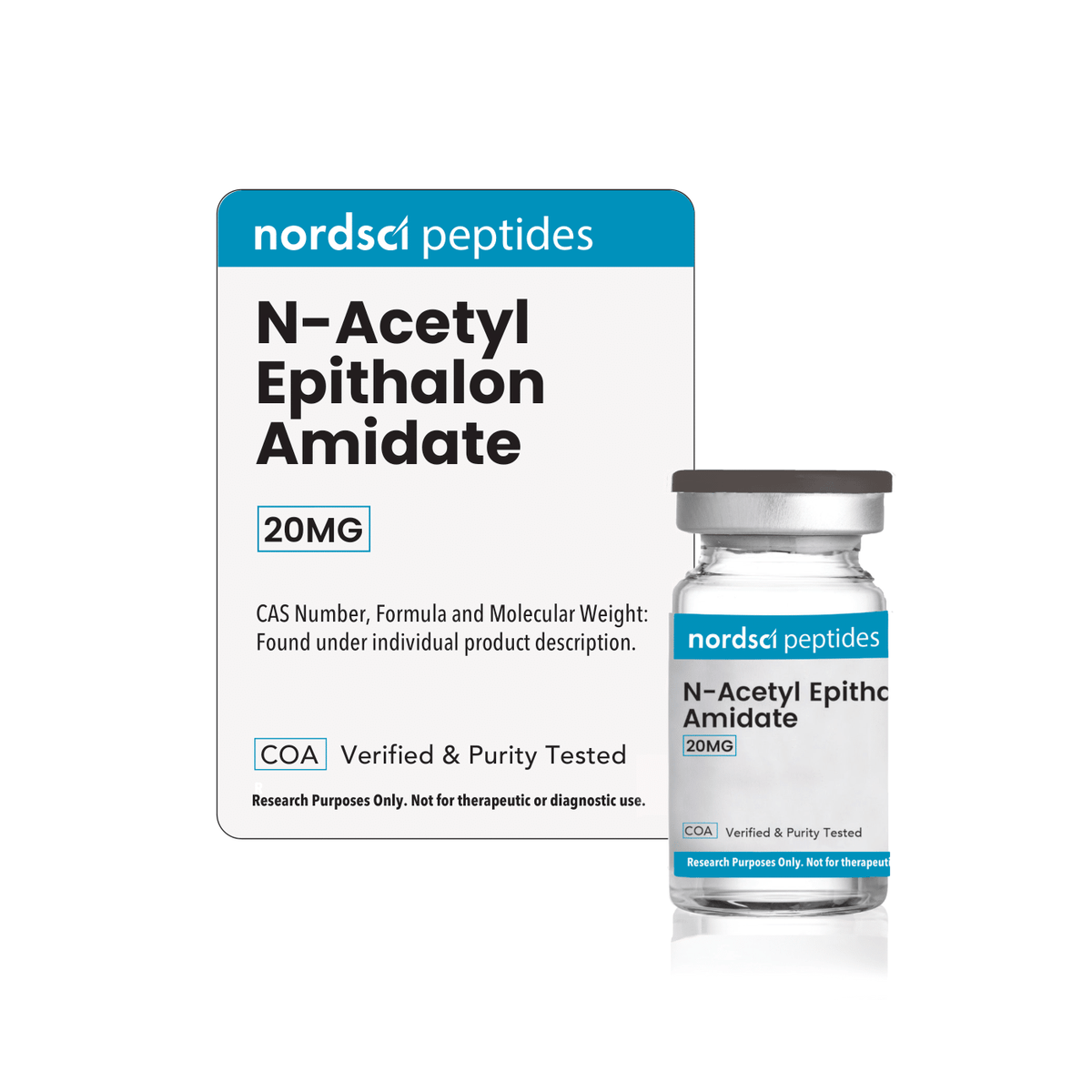
N-Acetyl Epithalon Amidate (20mg) – Product Description
N-Acetyl Epithalon Amidate (20mg) is a modified synthetic peptide supplied exclusively for controlled laboratory research, analytical evaluation, and in-vitro experimentation. The compound incorporates terminal acetylation and amidation and may be examined in experimental systems involving peptide stability, molecular characterization, and regulatory signaling.
Each lot is supported by batch-specific analytical documentation. Researchers should review the applicable Certificate of Analysis for identity, purity, testing methods, and reported analytical results.
FOR LABORATORY RESEARCH USE ONLY. NOT FOR HUMAN OR ANIMAL CONSUMPTION. NOT FOR DIAGNOSTIC, THERAPEUTIC, FOOD, DRUG, COSMETIC, OR SUPPLEMENT USE.
N-Acetyl Epithalon Amidate (20mg) – Research Specifications:
| Compound |
N-Acetyl Epithalon Amidate |
| Quantity |
20mg per vial |
| Compound Type |
Terminally modified synthetic peptide |
| Terminal Modifications |
N-acetylated and C-amidated |
| Form |
Lyophilized peptide powder |
| Purity and Identity |
Refer to the lot-specific Certificate of Analysis |
| Analytical Documentation |
Batch-specific documentation available through the COA Library |
| Storage Conditions |
Store sealed in a cool, dry environment protected from heat, light, and moisture; follow lot-specific documentation for long-term storage |
| Intended Use |
Controlled laboratory research, in-vitro experimentation, and analytical evaluation only |
| Restrictions |
Not for human or animal consumption or for diagnostic, therapeutic, food, drug, cosmetic, or supplement use |
What Is N-Acetyl Epithalon Amidate? Research Background
N-Acetyl Epithalon Amidate is a synthetic peptide analog incorporating acetylation at the N-terminus and amidation at the C-terminus. Terminal modifications are commonly evaluated in peptide research because they can alter molecular characteristics such as charge, stability, susceptibility to enzymatic degradation, and behavior under defined experimental conditions.
Laboratory investigations may compare modified and unmodified peptide structures using analytical methods and controlled in-vitro systems. Research variables can include peptide integrity, degradation profiles, molecular interactions, gene-expression measurements, and other predefined experimental endpoints.
Research involving telomere-associated mechanisms, genomic regulation, cellular replication, or circadian signaling must be interpreted within the limitations of the specific experimental model. Such research does not establish clinical utility, safety, efficacy, or suitability for human or veterinary use.
Important Research Notice: Nordsci research materials are supported by lot-specific analytical documentation. Researchers should review the applicable Certificate of Analysis for the methods and results associated with a particular batch.
THIS PRODUCT IS INTENDED FOR LABORATORY RESEARCH USE ONLY. NOT FOR HUMAN OR ANIMAL CONSUMPTION. NOT INTENDED FOR DIAGNOSTIC, THERAPEUTIC, FOOD, DRUG, COSMETIC, OR SUPPLEMENT USE.
N-Acetyl Epithalon Amidate – Key Research Applications
1. Cellular Longevity Pathway Research
Controlled laboratory models may use N-Acetyl Epithalon Amidate when examining molecular pathways associated with cellular replication, senescence, or long-term cellular regulation. Experimental findings remain specific to the model, protocol, and measured endpoints.
2. Telomere Signaling Studies
In-vitro studies may examine telomere-associated signaling, telomerase-related measurements, or chromosomal stability markers under defined experimental conditions. This research context does not establish an effect in humans or animals.
3. Genetic Regulation Research
Researchers may evaluate peptide interactions within experimental systems measuring gene expression, transcriptional activity, or related molecular regulatory processes. Appropriate controls are required to distinguish peptide-associated observations from other experimental variables.
4. Oxidative Stress Response Research
The compound may be evaluated in controlled models involving oxidative conditions or cellular stress-response signaling. These applications are limited to laboratory investigation and do not indicate protective, preventive, or therapeutic properties.
Handling and Research Use Considerations
N-Acetyl Epithalon Amidate (20mg) should be handled only by qualified laboratory personnel using procedures appropriate for synthetic peptide research materials. Researchers should document storage conditions, sample handling, analytical methods, control groups, and experimental variables to support reproducibility.
Protocol Design Considerations: Experimental outcomes may vary according to the model, concentration, assay methodology, exposure conditions, storage history, and other protocol-specific variables. Researchers are responsible for establishing suitable controls and validating methods for their intended analytical or in-vitro application.
This material is supplied strictly for controlled laboratory research and analytical evaluation. No dosing, administration, reconstitution, or in-vivo application guidance is provided.
N-Acetyl Epithalon Amidate (20mg) – Certificate of Analysis (COA)
Batch-specific Certificates of Analysis are available for N-Acetyl Epithalon Amidate supplied by Nordsci Peptides. Researchers should consult the applicable COA for reported identity, purity, analytical methods, and lot-specific results.
A Certificate of Analysis documents the reported characteristics of the tested batch. It does not establish clinical safety, therapeutic efficacy, regulatory approval, or suitability for human or veterinary use.
Where to Buy N-Acetyl Epithalon Amidate for Research
Nordsci Peptides supplies N-Acetyl Epithalon Amidate (20mg) exclusively as a laboratory research material. Batch-specific analytical documentation is available to assist qualified laboratories with compound verification, inventory records, and research traceability.
IMPORTANT: N-Acetyl Epithalon Amidate (20mg) is supplied exclusively for controlled laboratory research, in-vitro experimentation, and analytical evaluation. It is not for human or animal consumption and is not intended for diagnostic, therapeutic, food, drug, cosmetic, or supplement use. Researchers are responsible for compliance with all applicable institutional, local, state, and federal requirements.
Scientific References
- Peer-reviewed analytical literature addressing terminal modification and characterization of synthetic peptides.
- Laboratory research literature examining peptide stability under controlled in-vitro conditions.
- Published methodology concerning gene-expression, telomere-associated, and cellular signaling assays.
- Lot-specific Certificate of Analysis for reported identity, purity, analytical methods, and batch results.