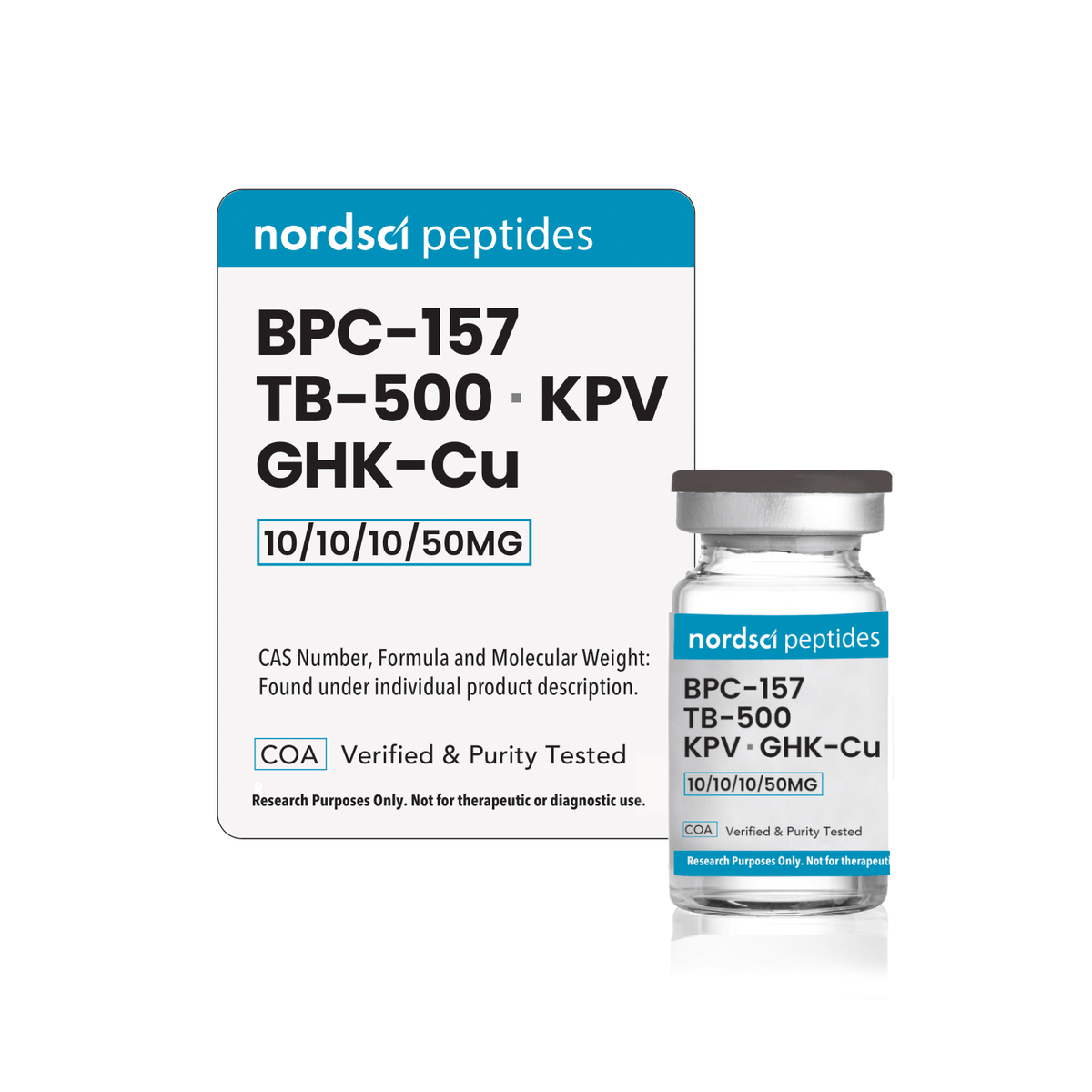
More about Klow Blend
Klow Blend is a multi-component laboratory research formulation containing
BPC-157,
TB-500,
KPV, and
GHK-Cu.
It is supplied for controlled in vitro experimentation, analytical characterization, and comparative studies involving multiple peptide-associated signaling systems.
The blend provides a standardized research input for laboratories examining how multiple synthetic peptide materials behave within a single defined assay environment. Experimental endpoints may include molecular binding, cell-associated signaling markers, cytoskeletal measurements, extracellular matrix-associated markers, or other predefined analytical observations.
References to cellular, barrier, matrix, inflammatory, or tissue-derived models identify categories of laboratory investigation only. They do not indicate therapeutic, restorative, protective, cosmetic, or human-use properties.
Klow Blend Research Specifications:
| Product Format |
Multi-component peptide research blend |
| Core Components |
BPC-157,
TB-500,
KPV, and
GHK-Cu
|
| Unit Quantity |
1 vial |
| Form |
Lyophilized powder |
| Source |
Chemical synthesis and compound-specific formulation |
| Purity / Identity |
Refer to the lot-specific Certificate of Analysis |
| Analytical Documentation |
Lot-specific documentation may report HPLC, mass spectrometry, or other applicable analytical results |
| Storage Conditions |
Store sealed at −20°C or below and protect from light, heat, and moisture unless otherwise stated in the applicable documentation |
| Research Classification |
Laboratory research and analytical use only |
| Restrictions |
Not for human or animal consumption or in vivo, diagnostic, therapeutic, food, drug, cosmetic, or dietary-supplement use |
What Is Klow Blend? Research Background and Mechanistic Focus
Klow Blend combines four synthetic peptide research materials in one formulation. Each component has a distinct structure and may be examined through different laboratory methods:
-
BPC-157 is a synthetic pentadecapeptide used in controlled studies involving peptide-associated molecular signaling.
-
TB-500 is a synthetic peptide research material associated with thymosin beta-4-related sequence research and actin-linked experimental systems.
-
KPV is a synthetic tripeptide commonly represented by the sequence Lys-Pro-Val and examined in melanocortin-related laboratory models.
-
GHK-Cu is a copper-associated peptide complex used in studies involving metal-peptide interactions and extracellular matrix-associated analytical markers.
Combining these materials allows researchers to compare multi-component observations against single-compound controls under consistent assay conditions. Appropriate experimental design is necessary because a blended formulation does not independently identify which component is associated with a measured result.
Researchers should use suitable controls, validated analytical procedures, and predefined acceptance criteria when evaluating a multi-component formulation. Findings should remain limited to the specific in vitro model, concentration range, exposure period, instrumentation, and analytical endpoints used.
Important Research Notice: Nordsci research materials are supplied with access to lot-specific analytical documentation. Researchers should consult the applicable Certificate of Analysis for reported identity and purity information.
THIS PRODUCT IS INTENDED EXCLUSIVELY FOR LABORATORY RESEARCH. NOT FOR HUMAN OR ANIMAL CONSUMPTION. NOT FOR IN VIVO, DIAGNOSTIC, THERAPEUTIC, FOOD, DRUG, COSMETIC, OR DIETARY-SUPPLEMENT USE.
Klow Blend Research: Key Laboratory Applications
1. Multi-Component Cellular Signaling Models
Klow Blend may be evaluated in controlled cell-based systems designed to measure predefined molecular or cellular markers. These studies can compare the blended formulation with untreated controls, vehicle controls, or separate compound-specific research arms.
Because Klow Blend contains multiple components, observed activity cannot automatically be attributed to a single peptide. Researchers should use appropriate comparator groups when compound-level interpretation is required.
2. Barrier-Associated and Cellular Marker Research
Laboratory studies may use Klow Blend in epithelial or other barrier-associated cell models to observe selected molecular markers under controlled conditions. Endpoints should be defined before testing and evaluated using validated analytical methods.
References to barrier-associated models describe the experimental system being studied. They do not indicate that Klow Blend protects, restores, maintains, or changes human or animal tissue.
3. Cytoskeletal and Extracellular Matrix-Associated Assays
The formulation may be used in in vitro studies measuring cytoskeletal, cell-migration-associated, copper-binding, or extracellular matrix-associated markers. These measurements can help characterize molecular activity within a defined laboratory model.
Results from these assays do not establish wound-related, regenerative, cosmetic, or structural outcomes in humans or animals. Conclusions should remain restricted to the observed analytical endpoints and experimental conditions.
4. Comparative Multi-Compound Assay Design
Klow Blend may serve as a multi-component comparator in studies that also include BPC-157, TB-500, KPV, or GHK-Cu as separate research arms. This structure can help laboratories compare blended observations with compound-specific assay results.
Reliable comparison requires consistent lot documentation, storage conditions, sample-processing procedures, exposure periods, control selection, and analytical instrumentation. Differences observed between study arms should not be interpreted beyond the limits of the selected model.
Klow Blend Handling, Quality Control, and COA Documentation
Klow Blend should be handled only by qualified laboratory personnel using established procedures for multi-component peptide research materials. Laboratories should document product receipt, lot identification, storage conditions, sample allocation, testing methods, and disposal.
No reconstitution volume, diluent selection, concentration, dosing, injection, administration, or in vivo application guidance is provided.
Quality-control considerations include:
- Confirm that the vial label and Certificate of Analysis display the same lot number.
- Record storage conditions and relevant environmental variables.
- Use qualified analytical procedures appropriate to a multi-component peptide formulation.
- Establish suitable controls before interpreting compound-associated activity.
- Retain lot documentation with the applicable experimental records.
- Restrict conclusions to the selected model, controls, methods, and observed laboratory results.
Lot-specific analytical reports apply only to the tested lot. They should not be interpreted as evidence of clinical safety, effectiveness, therapeutic value, or approval for human or veterinary use.
Where to Buy Klow Blend for Research Purposes
Nordsci Peptides supplies Klow Blend as a multi-component laboratory research material with access to lot-specific analytical documentation. Laboratories should evaluate formulation identity, reported analytical results, storage requirements, batch traceability, and institutional procurement standards before use.
Procurement Considerations for Research Teams
- Confirm the listed components and product format.
- Review the applicable lot-specific Certificate of Analysis.
- Verify labeling and batch traceability before opening the vial.
- Maintain documented storage and handling procedures.
- Use the material only within authorized laboratory research settings.
- Do not use the material in humans, animals, foods, drugs, cosmetics, or supplements.
IMPORTANT: Klow Blend is sold exclusively for laboratory research and analytical use. It is not a drug, food, dietary supplement, cosmetic, or therapeutic product. It is not approved for human or veterinary use and must not be used for consumption, diagnosis, treatment, prevention, compounding, cosmetic application, or any in vivo procedure.
Scientific References
- Research literature concerning the analytical characterization of synthetic BPC-157 peptide material.
- Laboratory research examining thymosin beta-4-related sequences, actin binding, and cytoskeletal assay systems.
- Research literature concerning KPV structure and melanocortin-associated laboratory signaling models.
- Analytical research examining GHK-Cu structure, copper coordination, and peptide-metal interactions.
- Validated laboratory procedures applicable to multi-component peptide identity, purity, stability, traceability, and comparative assay design.