
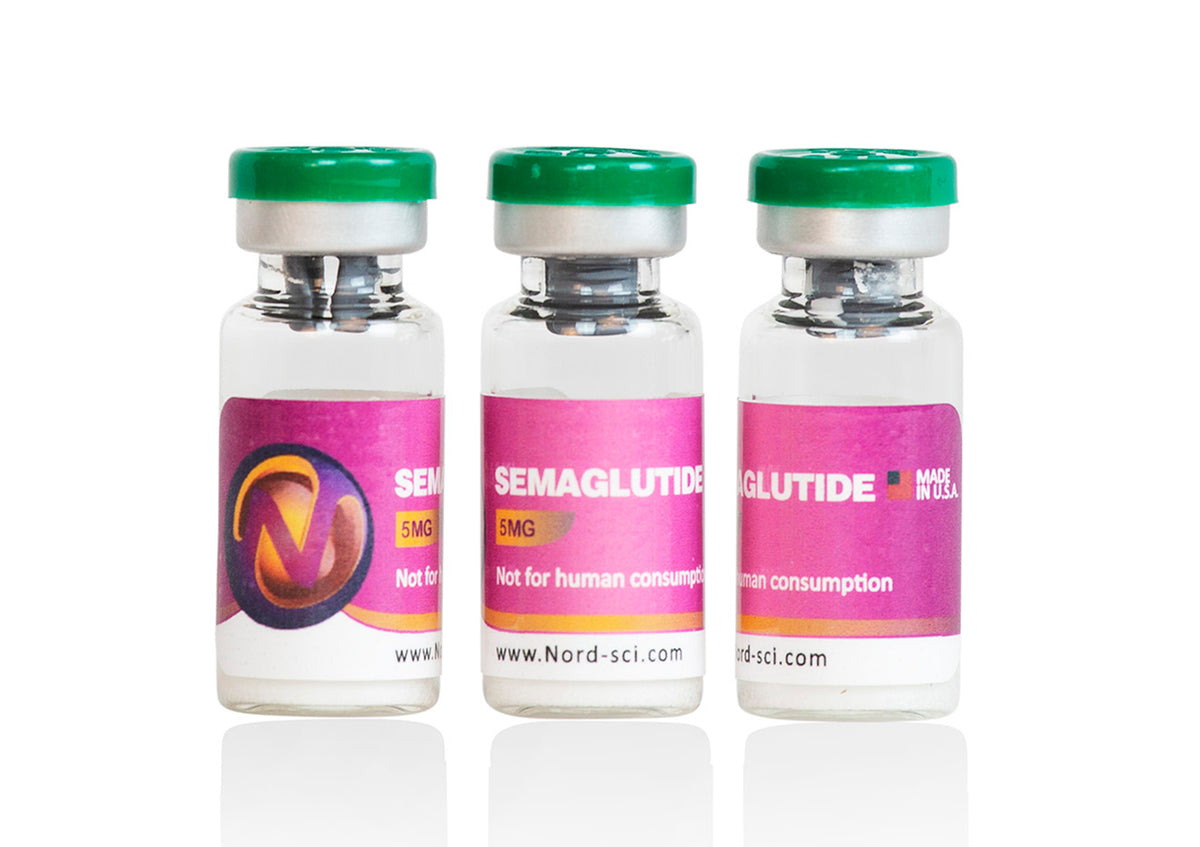
Semaglutide (5mg)
-
Regular Price
-
$199.95
-
Sale Price
-
$199.95
-
Regular Price
-
Sold Out
-
Unit Price
- per
- Regular Price
- $199.95
- Sale Price
- $199.95
- Regular Price
- Unit Price
- per
Semaglutide
Specification:
| Unit Size | 5 mg/vial |
| Unit Quantity | 1 vial |
| Purity (HPLC) | 99.8% |
| Sequence |
His-Aib-Glu-Gly-Thr-Phe-Thr-Ser-Asp-Val-Ser-Ser-Tyr-Leu-Glu-Gly-Gln-Ala-Ala-Lys(PEG2- PEG2-γ-Glu-17-carboxyheptadecanoyl)-Glu-Phe-Ile-Ala-Trp-Leu-Val-Arg-Gly-Arg-Gly
|
| Molecular Formula | C187H291N45O59 |
| Molecular Weight | 4111.12 |
| CAS | 910463-68-2 |
| Appearance | lyophilized White Powder |
| Source | Chemical Synthesis |
| Storage | Lyophilized Semaglutide is to be stored at -20°C and reconstituted Semaglutide can be stored at 4°C. |
| Terms | The products we offer are intended for laboratory research use only. Please familiarize yourself with our terms of service prior to ordering. |
Semaglutide, commonly known as Ozempic, is a derivative of GLP-1, a naturally occurring peptide hormone that regulates blood sugar levels and insulin secretion. Research indicates that Semaglutide can potentially improve heart, liver, and lung function while also slowing or preventing the effects of Alzheimer's disease. By delaying gastric emptying and reducing intestinal motility, Semaglutide effectively decreases appetite. This GLP-1 analog stimulates insulin secretion and suppresses glucagon secretion in a glucose-dependent manner.
GLP-1, a short peptide hormone approximately 30-31 amino acids in length, plays a crucial role in lowering blood sugar levels by enhancing insulin secretion. It has also been associated with neurotrophic effects in the brain and is involved in protecting beta cell insulin stores and promoting nervous system function. In the gastrointestinal system, GLP-1 significantly reduces appetite by delaying gastric emptying and decreasing intestinal motility. Moreover, preliminary studies have revealed the potential impacts of GLP-1 on various organs such as the heart, fat, muscles, bones, liver, lungs, and kidneys.
While GLP-1 research primarily focuses on treating and preventing diabetes, as well as suppressing appetite, secondary research investigates its potential cardiovascular benefits. Recent studies also highlight the ability of GLP-1 to mitigate neurodegenerative diseases, particularly Alzheimer's, by slowing down or preventing the accumulation of amyloid beta plaques.
In a phase 3 clinical trial involving overweight or obese adults without diabetes, the efficacy of Semaglutide was assessed compared to a placebo, along with lifestyle modifications. A total of 1961 participants received weekly subcutaneous injections of 2.4 mg of Semaglutide or placebo over 68 weeks, while both groups received counseling on diet and exercise. The primary outcomes measured were the percentage change in body weight and weight reduction of at least 5%.
At week 68, the mean weight reduction was significantly higher in the Semaglutide group compared to the placebo group (14.9% vs. 2.4%; estimated difference of -12.4 percentage points; 95% CI, -13.4 to -11.5). Furthermore, a greater proportion of participants in the semaglutide group achieved a weight loss of at least 5% compared to the placebo group (86.4% vs. 31.5%). Regarding safety, mild to moderate adverse events, mainly gastrointestinal, were reported, leading to treatment discontinuation in 7.0% of the Semaglutide group and 3.1% of the placebo group. Serious adverse events, primarily gastrointestinal and hepatobiliary, occurred more frequently in the semaglutide group.
It was concluded overweight or obese adults without diabetes experienced clinically relevant weight loss when treated with weekly injections of Semaglutide (2.4 mg) in conjunction with lifestyle modifications.
The primary concern for peptide researchers today is product purity. Nord-sci guarantees our product purity by performing independent testing of our products and providing those certifications for our customers in our product descriptions.
THIS PRODUCT IS NOT INTENDED TO TREAT, CURE OR DIAGNOSE ANY CONDITION OR DISEASE AND IS NOT FOR HUMAN CONSUMPTION.
ALL PRODUCTS OFFERED ARE INTENDED FOR LABORATORY RESEARCH USE ONLY.
Mix each vial with: Bacteriostatic water. 1-2ml depending on desired dissolution.
Administration: 0.5-1 mg/once per week
Semaglutide Peptide (5 mg Vial) – Product Description
Semaglutide is a long-acting GLP-1 receptor agonist peptide engineered for controlled laboratory research on incretin biology, metabolic regulation, and energy-balance pathways. This lyophilized research peptide is synthesized to high purity and is suitable for in vitro and approved in vivo preclinical models where investigators require a stable, long-duration GLP-1 analogue.
Unlike short-acting native GLP-1, semaglutide incorporates strategic amino acid substitutions and a C18 fatty diacid side chain to extend half-life and enable sustained GLP-1 receptor engagement in research environments. Nordsci Semaglutide is produced under strict quality controls, with each lot validated for identity and purity prior to release for qualified laboratory use.
Semaglutide Research Peptide Specifications:
| Unit Size | 5 mg/vial |
| Unit Quantity | 1 vial |
| Purity (HPLC) | ≥ 99% |
| Sequence | HXEGTFTSDVSSYLEGQAAKEFIAWLVRGRG (GLP-1 analogue with Lys26 C18 fatty diacid modification and stabilizing substitutions) |
| Molecular Formula | C187H291N45O59 |
| Molecular Weight | ~4113.6 g/mol |
| CAS Number | 910463-68-2 |
| Appearance | Lyophilized white to off-white powder |
| Source | Chemical synthesis |
| Storage Conditions | Store lyophilized vials at ≤ -20 °C, protected from light and moisture. For short-term use, reconstituted solutions may be stored at 2–8 °C under sterile conditions according to institutional guidelines. |
| Research Use Only | This semaglutide product is designated strictly for laboratory research use. Not for human consumption, clinical treatment, or veterinary applications. Review all institutional and regulatory requirements prior to ordering. |
What Is Semaglutide? Research Background and Mechanism
Semaglutide is a synthetic analogue of human glucagon-like peptide-1 (GLP-1) designed to resist DPP-4 degradation and maintain prolonged GLP-1 receptor activation in experimental systems. It shares high sequence homology with endogenous GLP-1 while incorporating structural modifications that enable extended half-life and albumin binding in circulation.
In research models, semaglutide acts as a selective GLP-1 receptor agonist, allowing investigators to interrogate:
- Insulin and glucagon secretion dynamics in pancreatic islet systems
- Appetite signaling, satiety, and food-intake regulation via central GLP-1 pathways
- Gastric emptying kinetics and nutrient-delivery timing to the intestine
- Glucose homeostasis mechanisms and beta-cell functional responses
- Cardiometabolic markers including lipids, inflammatory signals, and vascular endpoints
Clinical trial data in people with type 2 diabetes and individuals with overweight or obesity have demonstrated that GLP-1 receptor agonism with semaglutide can significantly impact body weight, glycemic indices, and cardiometabolic risk markers. These findings support continued preclinical and translational research into GLP-1 biology, dosing paradigms, and combination strategies within controlled scientific settings.
Important Research Notice: All references to clinical or human data are provided solely to contextualize ongoing scientific investigation around GLP-1 receptor agonists. This product is not approved for therapeutic use and must not be used as a drug, supplement, or self-administered compound.
Semaglutide Research Areas and Laboratory Applications
Semaglutide’s pharmacological profile makes it a versatile tool compound for multiple research domains, including:
1. Metabolic and Weight-Management Research
Semaglutide is frequently utilized in models exploring energy intake, body-weight trajectories, and adipose tissue biology. Investigators leverage its sustained GLP-1 receptor activity to study:
- Longitudinal body-weight changes and adiposity distribution in diet-induced obesity models
- Interactions between GLP-1 signaling, hypothalamic appetite circuits, and hedonic feeding
- Cross-talk between adipose tissue, liver, and skeletal muscle in metabolic syndrome paradigms
2. Glycemic Control and Beta-Cell Function
GLP-1 receptor agonists such as semaglutide are central tools in preclinical diabetes research. In appropriate models, semaglutide enables detailed evaluation of:
- Glucose-stimulated insulin secretion and beta-cell workload
- Glucagon suppression and hepatic glucose output dynamics
- Pancreatic islet morphology, stress signaling, and survival pathways
3. Cardiometabolic and Vascular Outcomes
Large outcome trials have prompted intensive mechanistic research into how GLP-1 receptor agonism influences cardiovascular risk markers. In preclinical systems, semaglutide is applied to investigate:
- Endothelial function, vascular tone, and inflammatory signaling
- Cardiac structure and function in cardiometabolic models
- Biomarker profiles related to atherosclerosis and heart failure risk
4. Combination and Stack-Design Studies
Semaglutide can be positioned within research frameworks that examine combination strategies, such as pairing GLP-1 receptor agonism with GIP agonists, glucagon agonists, or peptide stacks focused on weight management, metabolic resilience, or recovery. All such work must be conducted under formal protocols, with clear separation between exploratory research and any clinical decision-making.
THIS PRODUCT IS INTENDED FOR LABORATORY RESEARCH USE ONLY. NOT FOR HUMAN CONSUMPTION. NOT INTENDED TO DIAGNOSE, TREAT, CURE, OR PREVENT ANY DISEASE OR CONDITION.
Semaglutide Reconstitution and Handling for Research
Reconstitution Guidelines (Research Use Only):
For typical laboratory workflows, investigators may reconstitute each 5 mg vial of semaglutide with sterile bacteriostatic water or another suitable sterile diluent to achieve the desired working concentration for their protocol design. The specific diluent volume (for example, 1–2 mL) should be selected based on target concentration, vehicle tolerability, and institutional standards.
Following reconstitution, solutions should be handled using sterile technique, aliquoted to minimize freeze–thaw cycles, and stored according to internal stability data and local laboratory procedures. All experimental dosing schemas, administration routes, and time courses must be defined and approved within the research institution’s governing framework.
Note: Any dosing ranges described in external literature reflect the parameters of those specific studies and do not constitute usage recommendations for this product. Per-kilogram doses derived from animal models do not translate to human dosing.
Semaglutide Certificate of Analysis (COA) and Quality Controls
Each batch of Nordsci Semaglutide undergoes independent third-party analytical testing, including HPLC purity assessment and mass spectrometry–based identity confirmation. A detailed Certificate of Analysis (COA) is maintained for every lot and is available to qualified research institutions upon request or via their account documentation.
Additional internal quality controls include appearance verification, peptide content assessment, and review of synthetic and purification process data to ensure consistency across production runs.
Where to Buy Semaglutide (5 mg Vial) for Research
Semaglutide should be sourced exclusively from reputable peptide manufacturers that provide verifiable quality documentation and clearly designate products for research use. Nordsci Peptides focuses on supplying high-purity, rigorously tested peptides to licensed laboratories and research professionals requiring consistent material for reproducible study design.
Research Procurement Considerations:
- Confirm that each lot is accompanied by a current COA and appropriate analytical data
- Ensure that storage and handling requirements align with institutional infrastructure
- Document chain of custody and inventory management for regulatory and audit readiness
Compliance Reminder: This semaglutide product is sold exclusively for in vitro work and approved preclinical in vivo research settings. It is not a finished pharmaceutical, is not compounded for patient use, and must not be used as a substitute for any approved drug product.
Scientific References
- Lau J, Knudsen LB, Knudsen JS, et al. Discovery of the once-weekly GLP-1 analogue semaglutide. J Med Chem. 2015;58(18):7370-7380.
- Marso SP, Bain SC, Consoli A, et al. Semaglutide and cardiovascular outcomes in patients with type 2 diabetes. N Engl J Med. 2016;375(19):1834-1844.
- Wilding JPH, Batterham RL, Calanna S, et al. Once-weekly semaglutide in adults with overweight or obesity. N Engl J Med. 2021;384(11):989-1002.
- Husain M, Birkeland KI, Donsmark M, et al. Semaglutide (SUSTAIN 6 and PIONEER 6) and cardiovascular outcomes. Diabetes Obes Metab. 2020;22(10):1882-1893.
- Chao AM, Wadden TA, Berkowitz RI. Semaglutide for the treatment of obesity. Curr Opin Endocrinol Diabetes Obes. 2021;28(6):527-532.
- Kommu S, et al. Semaglutide. In: StatPearls. Treasure Island (FL): StatPearls Publishing; updated 2024.