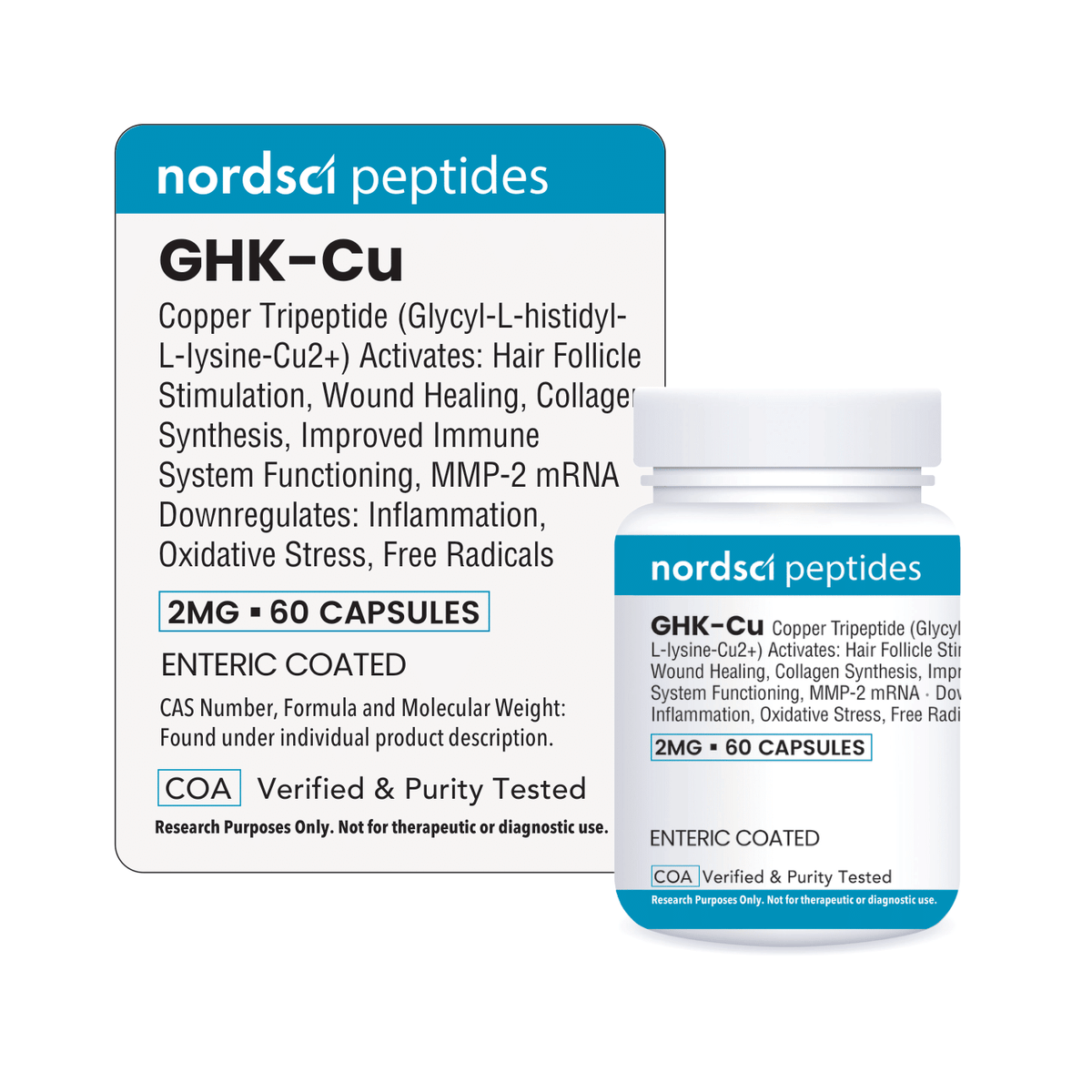
GHK-Cu Capsules – Product Description
GHK-Cu Capsules are supplied for laboratory research investigating copper-binding peptides, cellular signaling pathways, and molecular processes associated with tissue remodeling and regenerative biology. GHK-Cu is a naturally occurring copper peptide studied in experimental models focused on gene expression regulation, cellular repair signaling, and biochemical pathways related to extracellular matrix activity.
In peptide research environments, GHK-Cu has been examined for its interaction with biological pathways associated with collagen synthesis, cellular regeneration, and oxidative stress regulation. Controlled laboratory studies frequently explore how this copper peptide influences gene expression patterns connected to tissue repair and cellular maintenance.
GHK-Cu Capsules – Research Specifications:
| Format | Encapsulated peptide compound |
| Active Ingredient | GHK-Cu (Copper Tripeptide) |
| Delivery Form | Capsules |
| Purity / Identity | Research-grade; refer to Certificate of Analysis (COA) for lot-specific analytical data |
| Appearance | Capsule format |
| Storage Conditions | Store sealed in a cool, dry environment protected from heat, light, and moisture |
| Research Use Only | Supplied exclusively for laboratory research use. Not for human consumption or clinical use. |
What Is GHK-Cu? Research Background
GHK-Cu is a naturally occurring copper-binding peptide composed of the amino acids glycine, histidine, and lysine bound to a copper ion. This peptide has been detected in human plasma and is studied in laboratory environments for its potential role in regulating biological processes related to tissue remodeling and cellular communication.
One of the most frequently studied characteristics of GHK-Cu involves its potential interaction with gene expression pathways. Experimental models have explored how this copper peptide may influence cellular signaling mechanisms associated with regeneration, collagen synthesis, and extracellular matrix regulation.
Researchers also investigate the peptide’s relationship with oxidative stress pathways and molecular signaling processes involved in maintaining tissue structure. These investigations are typically conducted within controlled laboratory settings designed to analyze biochemical markers related to cellular repair mechanisms.
Researchers studying regenerative signaling and cellular metabolism pathways may also examine related compounds involved in tissue repair and metabolic signaling, including
BPC 157,
Thymosin Beta 4, and
MOTS-C.
Important Research Notice: Nordsci peptide materials are supported by lot-specific analytical documentation. Certificates of Analysis are available for laboratory verification and experimental reproducibility support.
THIS PRODUCT IS INTENDED FOR LABORATORY RESEARCH USE ONLY. NOT FOR HUMAN CONSUMPTION. NOT INTENDED TO DIAGNOSE, TREAT, CURE, OR PREVENT ANY DISEASE OR CONDITION.
GHK-Cu – Key Research Applications
1. Gene Expression and Cellular Signaling Studies
GHK-Cu is frequently studied in laboratory experiments examining gene expression pathways involved in cellular repair and tissue remodeling. Researchers may analyze molecular markers associated with signaling pathways that regulate regenerative biological processes.
2. Extracellular Matrix and Collagen Research
Experimental research involving copper peptides often investigates their potential influence on collagen synthesis and extracellular matrix activity. These studies may evaluate biochemical pathways involved in tissue structural maintenance.
3. Oxidative Stress Pathway Analysis
Some laboratory protocols explore how copper peptides interact with oxidative stress signaling pathways. Researchers may measure cellular biomarkers associated with antioxidant defense and cellular protection mechanisms.
4. Tissue Remodeling and Regeneration Studies
Investigations involving regenerative biology frequently examine peptides that interact with cellular repair signaling pathways. GHK-Cu research models may evaluate molecular responses associated with tissue regeneration and cellular renewal processes.
Handling and Research Use Considerations
GHK-Cu Capsules should be handled according to standard laboratory procedures used for peptide research materials. Proper storage, contamination prevention, and detailed documentation of experimental conditions help maintain compound integrity and support reproducible research outcomes.
Protocol Design Considerations: Research examining regenerative biology and cellular signaling can be influenced by environmental conditions, oxidative stress variables, and baseline metabolic status. Carefully controlled laboratory environments are essential for accurate interpretation of experimental results.
Note: The information provided here is intended strictly for laboratory research reference. All experimental work should be conducted by qualified professionals within appropriate research facilities.
GHK-Cu Capsules – Certificate of Analysis (COA)
Each batch of GHK-Cu Capsules includes a Certificate of Analysis verifying peptide identity and quality parameters. These analytical reports assist laboratories with procurement validation, quality assurance documentation, and research reproducibility tracking.
Where to Buy GHK-Cu Capsules for Research
Laboratories sourcing peptide compounds typically prioritize consistent synthesis standards, transparent analytical documentation, and reliable quality control procedures. Nordsci Peptides provides research-grade peptide materials supported by analytical verification and manufacturing protocols designed to support reliable laboratory research outcomes.
IMPORTANT: This product is supplied exclusively for laboratory research use. It is not approved for human consumption or clinical application. Researchers are responsible for ensuring compliance with all applicable institutional and regulatory guidelines.
Scientific References
- Scientific literature describing copper peptide signaling and biological activity.
- Research investigating gene expression pathways associated with tissue remodeling.
- Studies analyzing extracellular matrix regulation and collagen synthesis mechanisms.
- Laboratory methods used for analytical verification of peptide research materials.